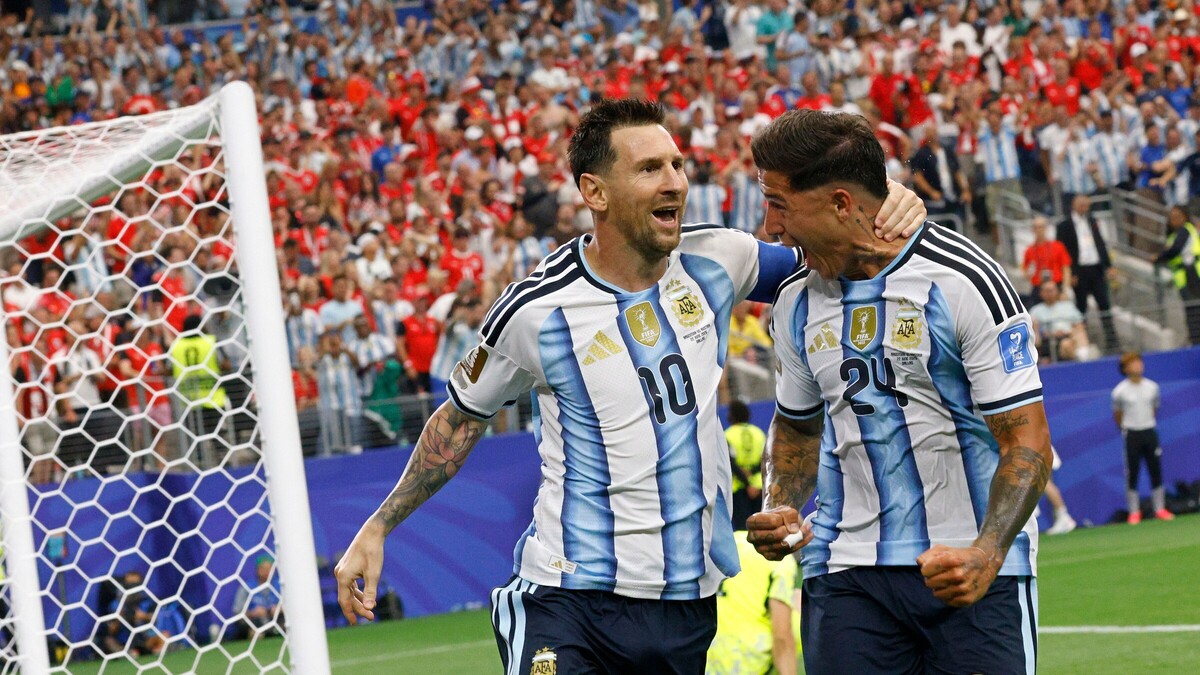
On Sidelines of World Cup 2026
World Cup immigrant player count hits record high. Nearly 23% represent country other than birthplace. Yet tournament happens on land tightening migrant policies.
Start at goal. Argentina vs Algeria opener. Masked man stands there.
Name soft: Luca. Surname heavy: Zidane.

Goalkeeper Luca Zidane blocks Lionel Messi. Algeria lose 0-3 to Argentina, Group J, World Cup 2026. Kansas City, USA. June 16, 2026. Photo: AP
Zinedine "Zizou" Zidane, Luca's father, born in France. Played for France. Brought glory to France. Legend of nation that both brought disaster and sheltered family.
Zidane ancestors lived peacefully in Aguemoune village, rugged Kabylia mountains, Algeria since 7th century. Before Arabs, Islam arrived. 1950s, Algeria fought France for independence. Villages burned. Kabyle people fled across Mediterranean. Carried typical migrant baggage: hope for children, nostalgia across generations.
Among travelers, 17-year-old Smail Zidane. Uprooted like tree, Smail struggled early in France. Drifted, searched for livelihood. Stopped in Marseille. Met Malika, fellow Algerian exile. Loved, moved to La Castellane. Housing built for French returnees from Algerian war. War grew fierce. Housing welcomed Algerians, Moroccans, sub-Saharan Africans, Caribbeans. Diverse migrants built new lives under one roof.
Fate-joined couple had 5 children: Madjid, Farid, Noureddine, Lila, Zinedine. Life cramped. Not everyone sat during meals. Hard struggle. Malika managed kids at home. Seven mouths fed on Smail's storekeeper-guard salary. Raised in crime, drug-ridden neighborhood. Smail stayed awake many nights to keep kids decent.
Night of July 12, 1998. France sleepless. Youngest son Zidane headed two goals against Brazil. World Cup final shook Stade de France, Paris. Millions flocked to Champs-Elysees. Zidane's face projected on Arc de Triomphe with "Zizou president". Sea of people held many Kabyle fans. Zidane family absent. Smail, wife watched home with kids. Past hardship receded. New stories began.
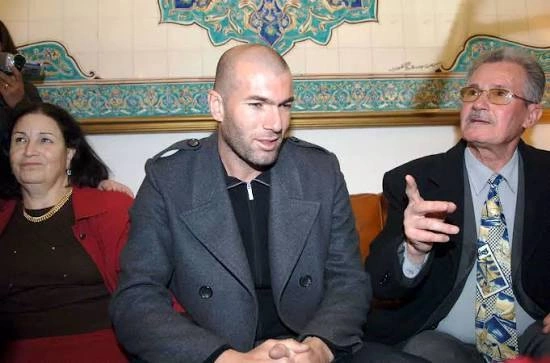
Zidane (middle) with father Smail, mother Malika visit Algeria, 2006. Photo: FR
Latest Zidane clan story: Luca. Two-month-old slept in crib night father became national symbol of peace, integration. Knew nothing of future youth spent escaping father's shadow.
Journey arduous as grandfather's sea crossing. Played French youth teams, trained Real Madrid. Everywhere labeled "Zizou's son". 2025, found identity. Stopped running forward, turned back. Asked FIFA to change sports nationality to wear Algeria colors. "Grandfather wanted me proud of roots," Luca told BeIN Sports. Proudly left father's homeland for ancestral colors. Returned to place never lived.
World Cup 2026 opener vs Argentina. Luca wore protective mask for injury. Mask hid "Zizou's son" label. Told own story first time.
Messi ignored stories. Crushed Algeria, Luca 3-0 with hat-trick. Path to greatest World Cup scorer. Cold as Barca's 3-0 win over Real Madrid at Bernabeu, November 19, 2005. First El Clasico. Zinedine left mark on Messi's leg. Tackle, yellow card.
Luca has return story, also rise. Second match vs Jordan. Conceded early to Al Rashdan shot. Mistake threatened to sink Luca. Admitted needing psychologist help on World Cup journey.
Stood firm in goal. Made three key saves. Teammates fought back, won 2-1. Resilience: invisible legacy of Kabylie migrants. Passed not by blood, but stories of crossing sea to survive.

Luca catches ball in Algeria 2-1 comeback win against Jordan, World Cup 2026 group stage, San Francisco Bay stadium, Santa Clara, California, USA, June 22, 2026. Photo: Reuters
If Luca removes mask to live simple life, another goalkeeper wants statue. That Eloy Room of Curacao. Germany score 7 goals against him in 1-7 opening loss. Before Room career match, look at another number 7.
Year 2016, small nation Curacao debate: why coach Patrick Kluivert call players born outside island, reduce chance for "pure" players. Kluivert hate argue. He make friendly match: migrant players versus island-born players. Migrant team win 7-1. Debate disappear.
Room play goalkeeper for winning team, one year after Kluivert call, ask if he want play World Cup. Born 1989 Nijmegen, Netherlands. Room grow at Vitesse academy, play Netherlands U20, win Dutch league (PSV), win National Cup (Vitesse). He hope play for Netherlands. Kluivert call remind him of father homeland.
No one know call details. Kluivert call start Room journey. Journey cross another number 7. March 2023, Curacao play friendly with champion Argentina. Result 7-0. Messi score hat-trick, reach 100 goals for Argentina. Messi—highly requested shirt swapper—ask Room for shirt. Room take home, frame, hang in living room.

Goalkeeper Eloy Room wave to crowd after Curacao draw Ecuador, World Cup 2026 Group E match 2, Kansas City, Missouri, USA, June 20, 2026. Photo: AP
After World Cup, next to Messi shirt will be Room shirt from 0-0 draw with Ecuador. Enner Valencia face Room early. People fear collapse like Germany match. Maybe number 7 remind Room. He play 90 minutes like possessed against Ecuador. Block Valencia shot, plus 15 more saves. Media write "No room for goals". Room break record for most saves in World Cup match, beat US goalkeeper Tim Howard 2014 record. Howard need 120 minutes. Room need only 90.
Room keep shirt. He tell story to grandchildren later. Performance bring Curacao first point. Room say he deserve statue.
If Room get statue, fans see more than 90 great minutes. They see story of return. Curacao speak Papiamento, language of slaves forced across Atlantic. Curacao matches show human movement: flee hunger, drag in chains. Football give anonymous people name, number, 16 save moments before crowd.
Room shirt next to Messi shirt show two pieces of migration story on wall.
Messi need no more statues. World make enough: bronze, gold, wax, overused adjectives. Yet memorable Messi moment not goal, but miss penalty against Austria.
Miss remind people M10 human. He love (tell wife after match), worry (cry after goal because father Jorge seriously ill), tire (exhausted before 90 minutes against Austria), fear penalty kick. Football "gods" fall there. No complex trap, just goal, goalkeeper, lone man.
In US, football "god" fall at penalty spot before. Roberto Baggio, Italian Buddhist. 1994 World Cup final, man with divine ponytail learn impermanence when ball fly to sky. Enlightenment moment become autobiography title: "Goal is sky".
Baggio Italy not at World Cup. Italian blood present. It inside Messi.

Messi reacts after missing penalty in Argentina 2-0 win against Austria in matchday two of Group J, World Cup 2026 in Arlington, Texas, June 22. Photo: AP
In 1883, in Recanati town, Marche region, Italy, man named Angelo Messi packed life onto ship crossing Atlantic to Argentina, like hundreds of thousands of poor Italians then. He could not know crowd he joined would crystallize, over century later, into most talented left foot humanity ever witnessed. Lionel Messi of Rosario, pride of Argentina, is descendant of economic refugee. Name "Messi" world shouts is Italian name, piece of Recanati drifted away.
Stop at that thought. Greatest person of nation, ultimate pride of blue and white flag, is product of stranger crossing border, coming to land not theirs, and staying. Every "national identity" people bleed to protect, if traced back far enough, starts with migrant someone once wanted to expel.
Summer 2026 tournament happens in North America, while US tightens grip on immigrants—sweeps, deportation flights, fear creeping into undocumented neighborhoods. Meanwhile, in US stadiums, estimated one in four World Cup players is migrant or child of migrants: raised in Marseille, singing Algerian anthem; bearing Italian surname, crying under Argentine flag; or born in Netherlands but great-great-grandchild of tiny island. Whole tournament is living monument to phenomenon policy tries to stop.
Historian Yuval Noah Harari stated: Homo sapiens is migratory species. 70,000 years ago, few thousand individuals left Africa empty-handed, but quickly rose to dominance using secret weapon: ability to imagine things not real.
Flags, passports, this side and that side, purebred and mixed, superior and inferior, us and them... All imaginary orders, but hold destructive power because millions believe. Football does not erase these lines. But in 90 minutes, it shows how different world could look: where human value is measured by what they do, not where they happen to be born, or passport with their photo.

Lionel Messi celebrates scoring to make it 2-0 for Argentina in win against Austria in matchday two of Group J, World Cup 2026 at Dallas stadium in Arlington, Texas, June 22. Midfielder Leandro Paredes pulls shirt and hugs captain as he completes brace, raising World Cup goal record to 18. Photo: AP
Return to Recanati, where all began, to end. In same tiny town, 85 years before Angelo Messi left, another boy was born: poet Giacomo Leopardi. Confined in narrow hometown, Leopardi wrote famous poem of Italian poetry - L'Infinito, Infinite. Poem about man sitting behind hedge, imagining endless spaces beyond sight, feeling heart both feared and sweetly lost in vastness.
Night Messi stood on peak of World Cup history, he did not only write name into record. He closed, and opened, 143-year journey across ocean, to prove what maybe only football is naive and great enough to prove: That infinity lies not on this or that side of border. No us or them, only stories of moving forward and returning, to escape fate and make most beautiful things of word Human.
H.T.

Immigrant players - Australia's strength at World Cup 2026
Australia enters World Cup 2026 with players from different journeys, from neighborhoods in Sydney, European cities to refugee camps in Kenya, Guinea, and Tanzania. 25
Xavi: 'We will never see player like Messi again'
In commentary on The Athletic for World Cup 2026, former Barca midfielder Xavi Hernandez recalled memories of Lionel Messi and affirmed Argentina forward is unique genius. 215
Curacao goalkeeper wants statue after shining at World Cup
Goalkeeper Eloy Room half-joked that he deserves a statue in his homeland after an outstanding performance helped Curacao draw with Ecuador at the 2026 World Cup. 23
Children of legends to compete at World Cup 2026
The 2026 World Cup is not only a stage for contemporary stars, but also where many players carry their family legacy, aspiring to write the next chapter of their fathers' stories on the world's biggest stage. 25