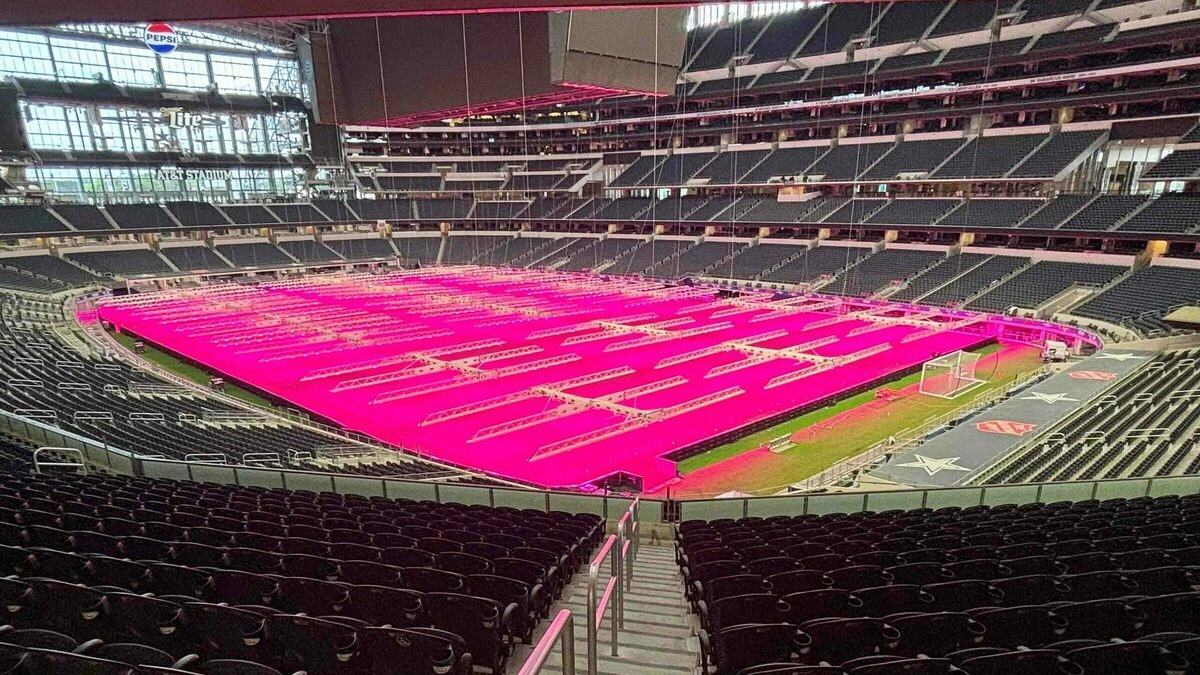
Why World Cup stadium grass bathes in pink light
Dallas stadium, hosting most World Cup 2026 matches, uses special light system. Shines pink light on grass.
Dallas stadium, or AT&T, holds 94,000 people in Arlington, Texas (US). Venue hosts 9 World Cup matches this year, more than other sites, including Argentina vs Jordan June 28 morning.
Venue home of NFL Dallas Cowboys, renovated for World Cup. According to AFP, organizers replaced artificial turf with natural grass, raised 60 cm higher than normal Cowboys field. Grass rolls measuring 1.2 by 15 meters covered field last month.
Meticulous effort to ensure perfect World Cup field follows harsh criticism of US pitch quality during Copa America 2024. Peru coach Jorge Fossati said rushed grass at AT&T stadium caused defender Luis Advincula injury. "Happened suddenly. Know it is grass, but not normal grass," Fossati said.
Advertisement
Organizers avoid repeating Copa America 2024 controversy. Dallas stadium manager Tod Martin said crew spent 45,000 work hours laying new pitch. Turf uses Kentucky ryegrass mix grown in Colorado, shipped to Texas in 24 refrigerated trucks. Irrigation system ensures water. Plastic fibers reinforce pitch before World Cup.
Dallas stadium has retractable roof, but grass lacks sunlight. Grass installation supervisor Ian Craig tries to mimic outdoor conditions. "Indoor stadium lacks sun. Must add light so grass grows," Craig told CBS News.
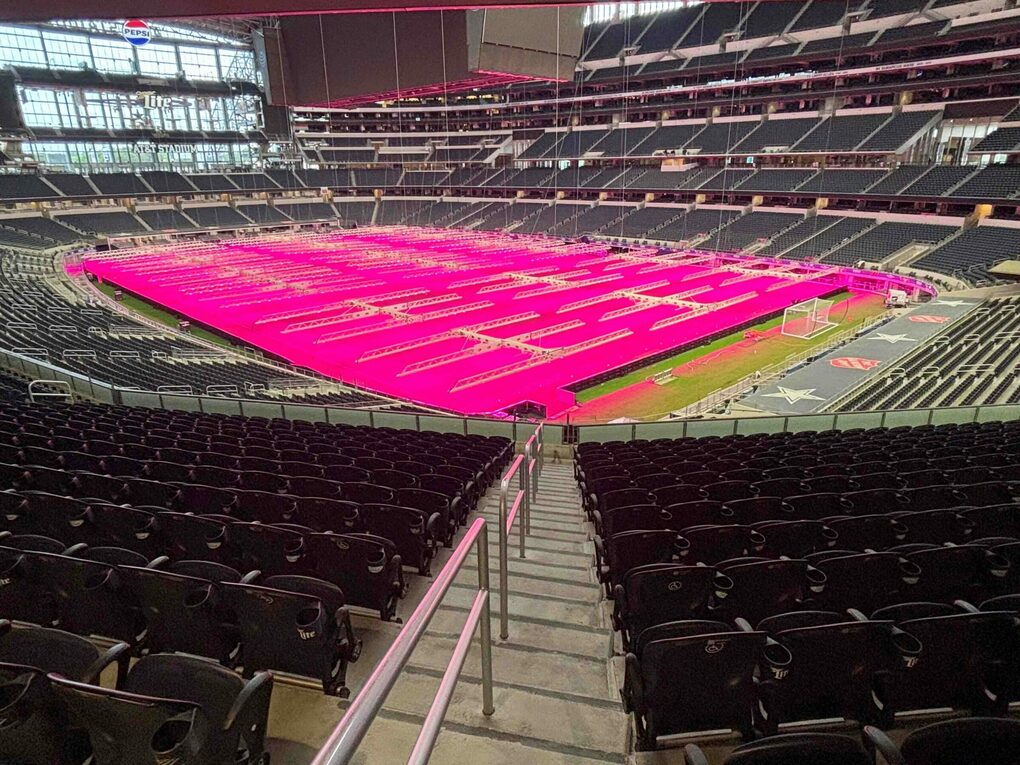
Pink light system helps grow grass at Dallas stadium. Photo: FIFA/SGL System
Dallas stadium installed special lights on overhead metal bars. Rig lowers close to grass. Lights shine pink to boost photosynthesis. Martin chose this after visiting Wembley and Tottenham Hotspur in London. Both use similar maintenance. "Impressive sight," Martin said.
Wembley lights use wheeled frames. Tottenham system uses sideline hydraulics. Dallas uses similar tech, but suspends rigs from roof.
FIFA pitch infrastructure head Ewen Hodge said this is first overhead rig. He told Washington Post systems usually use wheels. Dallas system retracts upward, clearing field. Hodge called it "creative step forward."