US, Iran discuss permanent opening of Strait of Hormuz, restoring Middle East oil flow. Market future depends on non-negotiating nation: China.
China, second-largest oil consumer, protected supply during Middle East war disruption of 11 million barrels daily. Beijing cut imports, tapped massive reserves, boosted clean energy. Domestic price impact minimized.
Measures stabilized global market. Early war, analysts warned of $200 oil. Lost oil exceeded 1 billion barrels, yet prices remained stable. China main reason.
"China acts as buffer for Asia, reducing global economic pressure," Daan Walter, director of energy consultancy Ember, said.
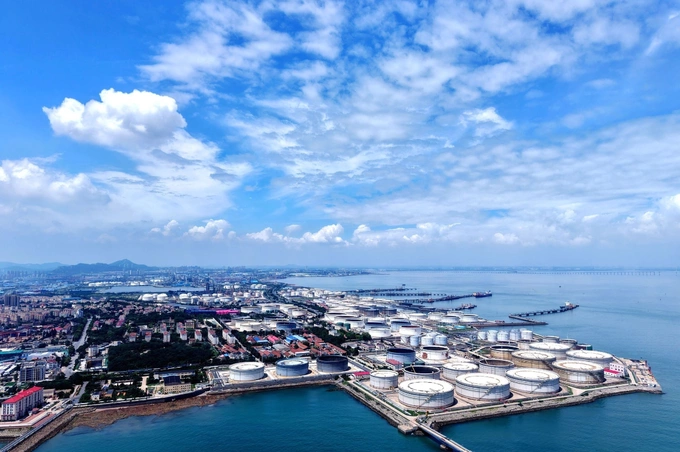
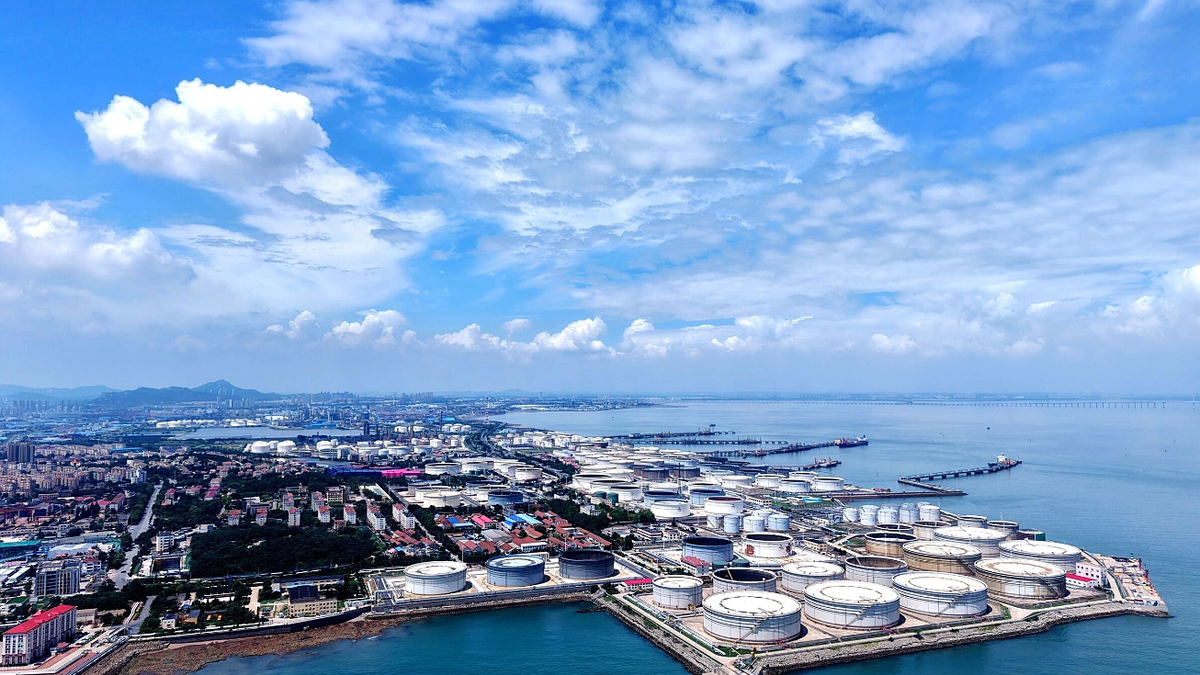
Imported crude oil storage tanks in Qingdao, Shandong, China, August 2025. Photo: AFP
Brent oil around $76, WTI $72 on June 24 morning. Prices fell recently on hopes of normal Strait of Hormuz operations. Brent was $70 pre-war, peaked over $120 early May, four-year high.
China energy influence grows. Policies, consumption trends decide oil prices, regardless of Strait of Hormuz reopening speed.
Societe Generale report: 1973 Arab oil embargo cut global supply 7%, prices surged 134%. Current conflict affects 14% global supply, yet prices stable.
Bank attributes paradox to China, "invisible hand rebalancing market." China can cut imports by 3 million barrels daily, matching Japan total demand.
China can cut consumption for multiple reasons. Pre-war, China stockpiled cheap Russian, Iranian crude, says Janiv Shah, VP of oil markets at Rystad Energy. China holds over 1 billion barrels in commercial, strategic reserves, releasing them since May.
"China once set oil price floor. This year, they set ceiling," Shah said.
During conflict, Beijing restricted refined product exports (diesel, gasoline) to secure domestic supply. Refiners lost incentive to buy international crude.
EV boom cuts fossil fuel demand. New energy vehicles make up 50% of new passenger car sales in China. IEA estimates China EVs cut oil demand by 1 million barrels daily last year.
"Great pressure relief valve for global oil market," David Fishman, China energy expert at Lantau Group, said. Shock absorption capacity limited; reserves finite.
After months of crisis fears, IEA warns Strait of Hormuz reopening could cause oversupply by 2027. IEA forecast: supply up 8 million barrels daily, demand up only 2 million. Opportunity for nations to rebuild depleted strategic reserves.
Global oil demand rises, but instability accelerates renewable transition. China, leader in EVs, batteries, solar, hit record clean energy exports in March after war began.
"Electrification accelerates. US-Iran talks uncertain, but key moment for global decarbonization," Cosimo Ries, analyst at Trivium China, said.
Muyu Xu, Kpler analyst, says oversupply possible next month. Fast Strait of Hormuz reopening returns 100 million trapped barrels to market.
Iran likely boosts production under temporary US sanctions waivers. Makes Iranian oil less attractive to China. Beijing bought discounted Iranian oil due to Tehran's limited buyers.
Nations finalize summer oil imports. China key to market rebalancing. "If prices drop, they buy to stockpile again," Fishman said.
Xu: market changed from two months ago. China only nation able to absorb excess oil. "But what will they want to buy?"

Chinese EVs, solar panels sell well amid energy crisis
China sold 26 billion USD EVs, solar panels, power storage systems in March, highest ever, due to surging demand to shift away from gasoline. 14
Why China stands firm against Middle East energy shock
After decades of transformation, China has strongest position if Strait of Hormuz closes, thanks to owning over half of global EVs and large share of renewable energy. 118