On June 18, Kpler stated that 25 ships had sailed through Hormuz, including cargo ships, tankers, and other vessels. This has been the highest since June 2.
The traffic ran out after the U.S. Navy ended the blockade of Iranian seaports, and Tehran also allowed ships to pass through Hormuz 60 days without paying the fee. Even so, the current circulation is still lower than before the front of the war that over 100 ships pass here every day, which have included dozens of oil ships.
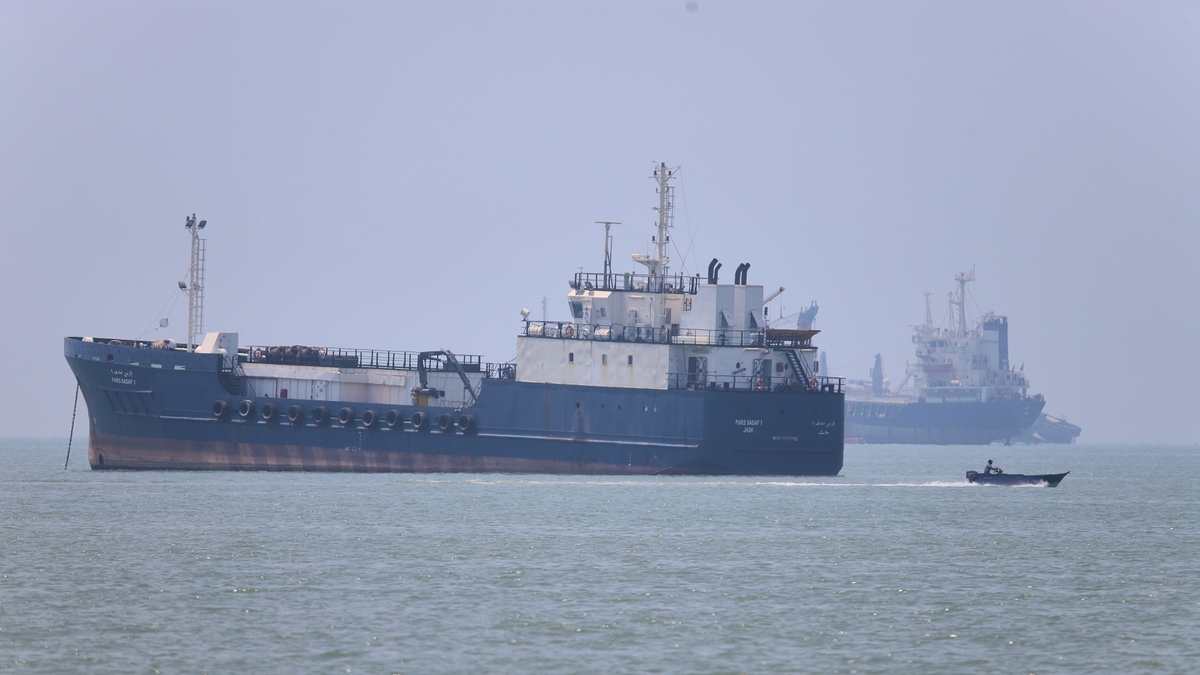
- The boats are anchored on the Strait of Hormuz off the coast of Bandar (2011), Iran, June 17. Image: AP*
Matt Smith - director of Kpler's goods research, said: "The amount of ships in general is fairly balanced, with 13 moves west - east and 12 in opposite directions". Hormuz is a transport route of about 20% of crude oil and liquid gas (LNG) globally before the war.
According to Kpler, on 18 June, three of Arab Saudi's super oil ships and one of UAE traversed the Hormuz Channel. These are very large-scale crude tankers (VLCC), which can transport up to 2 million barrels of oil per trip.
In a customer delivery report on 19 June, Kpler's analysts also stated Iran's super oil ships are re-activated the navigation device after shutting down in conflict. Five of Iran's super oil ships left the area on June 19 after filling the oil.
"The amount of ships moving in both dimensions indicates Iran's raw oil export activity is gradually returning to the normal operating model", identified analysts
According to Kpler, in ships passing through the Hormuz Channel on Thursday, 18 ships used maritime routes designated by Iran. Only one ship follows the route set by the International Marine Organization (IMO). With the remaining six ships, Kpler stated that the route could not be confirmed.
The US and Iran announced a peace agreement on 14/6. The two sides also signed the memo on the issue. On 18 June, the U.S. Vice President JD Dufresne foretold the press that so far "Iran still fulfills the commitments".
However, the agreement between the US and Iran also raises questions about the future Hormuz Channel management mechanism. According to the terms, after the 60th period of free-day charge over the end of the scene, Iran will negotiate with Oman and the Gulf countries on how to manage the Channel. This means the possibility of over-costing with future boats is still open.