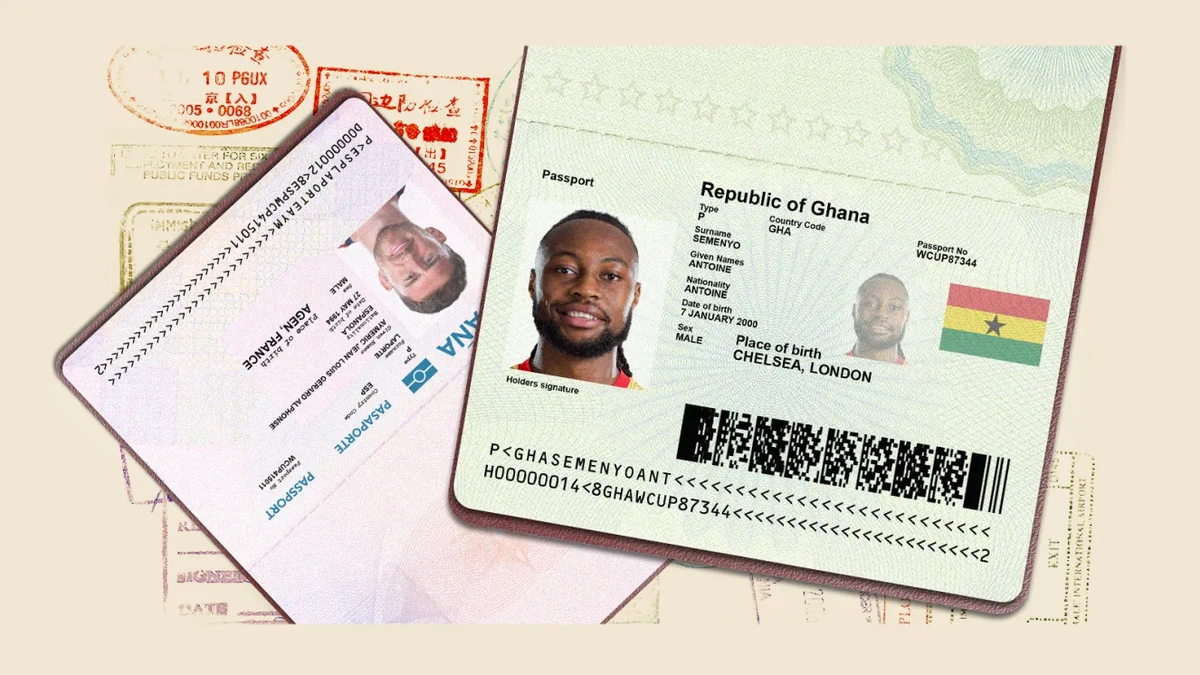
World Cup 2026 - 'Stage' for Migrant Players
North American tournament records unprecedented history-making diversity. 25% of 1,248 total players not born in country they choose to represent.
Ali Al-Hamadi travel long path. Journey take him from Iraq to Jordan, then Toxteth in Liverpool after father jailed by Saddam Hussein regime, finally reach World Cup 2026 dream.
Al-Hamadi father, Ibrahim, then law student, arrested for protesting in Iraq right before 2003 war. Event force Al-Hamadi and mother, Asseel Mohssen, flee to Jordan. Family finally reunite in Liverpool. Al-Hamadi football career start at Liverpool Schoolboys youth team. Season 2025-2026, he play for Luton Town in EFL Championship on loan, after spell at Ipswich Town in Premier League.
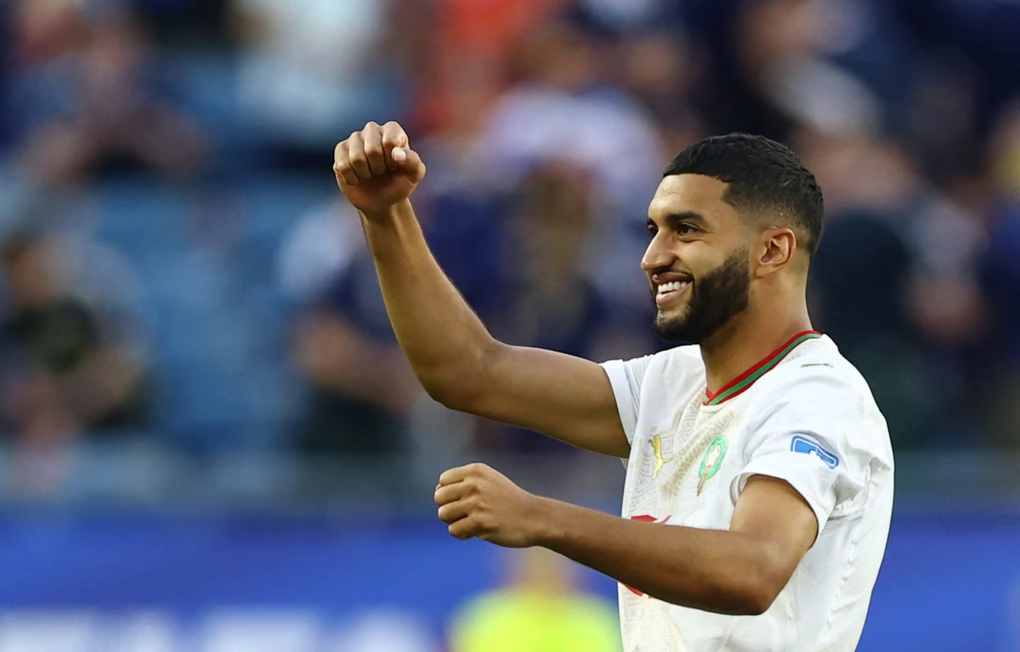
Ismael Saibari celebrate after Scotland – Morocco match in World Cup 2026 group stage at Boston, Foxborough, Massachusetts, US on June 19, 2026. Photo: Reuters
Advertisement
Stay
Playback speed
1x NormalQuality
AutoBack322p240p144pAutoBack0.25x0.5x1x Normal1.5x2x
/
Skip
Ads by
Opposite Al-Hamadi in Iraq lose 1-4 to Norway match in Boston on June 17 was Thelo Aasgaard. Midfielder also come from Liverpool Schoolboys, born in Liverpool, French mother, but choose Norway national team based on father nationality. Aasgaard teammate, Erling Haaland – star who score brace in match and now has 4 goals – born in Leeds (England), move with family to Bryne (Norway) at age 3.
Another case is Ismael Saibari, player scoring three goals, one in each group stage match for Morocco. Born in Terrasa, Catalonia (Spain) to Moroccan family, raised in Belgium, before join PSV Eindhoven in Netherlands.
Meanwhile, Nestory Irankunda – opener in Australia 2-0 win against Turkey in Vancouver – born in refugee camp in Tanzania. Parents from Burundi, flee brutal civil war, travel over 8,000 km to settle in Perth (Australia) when Irankunda was 3. His goal is first by foreign-born player for Australia at World Cup. "I always tell myself one day, hopefully soon, I will score at World Cup," Irankunda say.
Everywhere at this World Cup, migration stories appear. Some players play for birthplace but not where they grow up. Others play for country that raise them, not where born. Some play for country they never live in, but carry ancestral blood through parents or grandparents.

Nestory Irankunda celebrate after score in Australia – Turkey match in World Cup 2026 group stage at BC Place, Vancouver, Canada on June 13, 2026. Photo: Reuters
In fact, since opening of World Cup 2026, every matchday has at least one goalscorer whose parents' nationality or birthplace differ from badge on chest.
In scale, expanding to 48 teams make this biggest, most diverse football tournament in history. Yet, even by percentage, no World Cup final tournament record such strong nationality crossover.
Out of 1,248 players in North America this summer, 292 born outside country they represent (23%), double 9% rate at World Cup 2006 two decades ago. Out of 75 goals scored in first round of group stage, 15% come from players born in country different from team they represent.
Football world reflect complexity of national identity in modern times, world where borders blur. Still, rapid wave of naturalization and football nationality changes driven by strategy shift and mindset of managers, football associations, and players.
For example, in 2021, FIFA ease rules to help players switch national teams. Any player with maximum three appearances for national team in official matches before age 21 can switch to another country. Previously, rule stricter, preventing change after single official match for national team.
Relaxing rules drives nations to hunt talent strategically. Players with matching heritage or historical links identified, added to database, then federations convince them to switch national teams.
Curacao, constituent country of Kingdom of the Netherlands, ran project recruiting "Dutch" players with island roots. To convince skeptics, Patrick Kluivert—Curacao head coach in 2015—organized friendly match between local players and potential recruits. Recruits won 7-1.
65 Dutch-born players compete in this World Cup, including 25 for Curacao. Among them, Livano Comenencia—scored historic goal against Germany—born in Breda, trained at PSV academy. Morocco, Tunisia, DR Congo have squads with over half foreign-born players, result of actively recruiting best eligible talent.
For these three nations, biggest resource is France. Stats show 99 French-born players compete in World Cup 2026 (53 from Paris or suburbs), but only 23 in official France squad.
By birthplace, Germany has 50 players across teams this World Cup. England has 48. Within England squad, 20 players eligible for other nations. Conversely, Haaland (Norway), Antoine Semenyo (Ghana), Michael Olise (France) could form fearsome "made in England" attack trio if they chose differently.
Career motives drive some players; second World Cup door opens when first closes. Aymeric Laporte, former Man City center-back, played for France youth teams but path to senior squad blocked by talented "Les Bleus" defenders. FIFA approved his switch to Spain in May 2021, month before Euro.
Folarin Balogun at US press conference at Great Park Sports Complex, Irvine, California, US on June 22, 2026. Photo: Reuters
Striker Folarin Balogun, Arsenal Hale End academy product, made 13 appearances for England U21. Seeing no chance to displace Harry Kane, Brooklyn-born striker chose US team. In opener, Balogun scored twice in 4-1 win against Paraguay.
This World Cup highlighting stories of migrants and refugees carries deep message, especially amid travel bans and restrictions.
Four participating nations—Iran, Haiti, Ivory Coast, Senegal—faced partial or full tourist visa suspensions. Many journalists from Middle East and Africa denied entry. Somali referee denied entry. Iranian players, forced to camp in Mexico, allowed to cross US border only on match day, until rules eased June 25.
Though modern, this reality echoes early World Cup history and spirit. When Jules Rimet proposed World Cup in 1928, FIFA noted he was "inspired by idea of uniting and reconciling peoples through sport." FIFA also stated Rimet felt "aggrieved by marginalization of professional players at Olympic football."
George Moorhouse (fourth from right, back row), born in Liverpool, England but chose US team, at World Cup 1930. Photo: The Times
First Englishman to play in World Cup did not play for England. After migrating to Canada and playing for Montreal Canadian Pacific Railway, George Moorhouse moved to New York. He gained US citizenship, representing US in inaugural 1930 World Cup—20 years before England's debut in 1950.
Moorhouse's long journey pioneered countless similar World Cup campaigns. Here, nationality flows like water for players, identity far deeper and more complex than shirt colors they wear.
Beyond Borders at World Cup 2026
Immigrant player count at World Cup highest ever. Near 23% represent country other than birthplace. Yet tournament occurs on land tightening migrant policies. 51
Brobbey - Blackmail Victim Becomes Netherlands Hope
Once blackmailed and criticized long-term, striker Brian Brobbey rose to become new hope for Netherlands at World Cup 2026. 2
FIFA Wants to Change Penalty Shootout Rules Before World Cup Knockout Stage
FIFA propose single coin toss to simplify shootout procedure and limit random advantage before World Cup 2026 knockout stage. 50
Unfairness Before Final Round of World Cup 2026 Group Stage
Choosing eight third-place teams for knockout wildcards can cause unfair results for some World Cup 2026 teams, because final group matches occur non-simultaneously. 117
Iran Goalkeeper - From Homeless Boy to Match of Lifetime at World Cup
From struggling in cold Tehran nights and working odd jobs to survive, goalkeeper Alireza Beiranvand again wowed world by securing draw against Belgium at World Cup 2026. 33